Reflections on my first Game Art jury at Gobelins
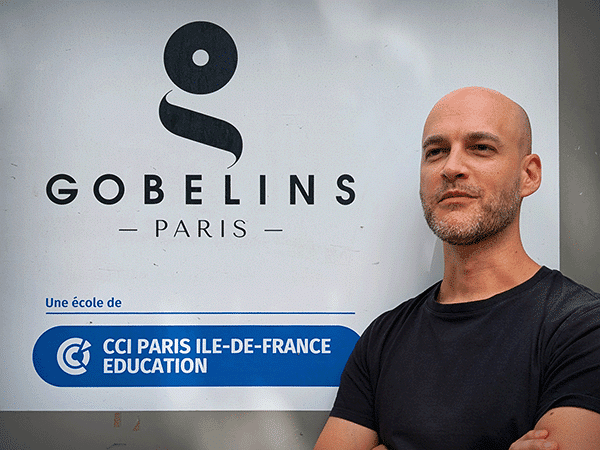
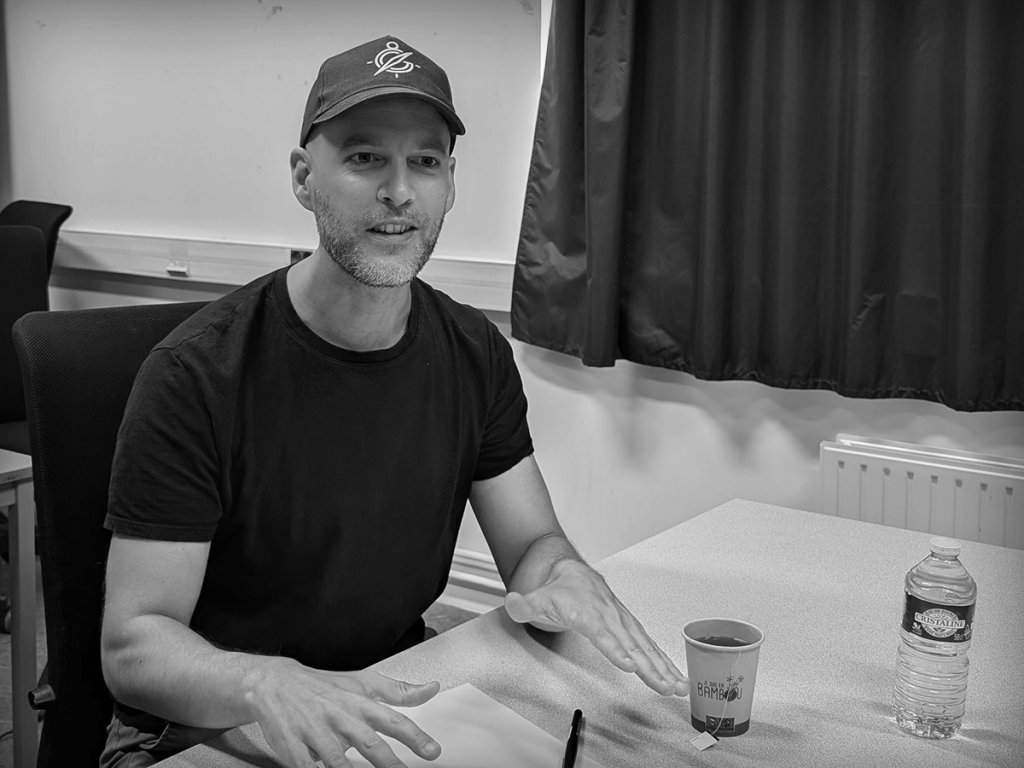
Last week I spent a day and a half in a room at Gobelins, watching 18 Master's students present games they'd had three months to prototype. First edition of this Game Art jury. Thanks to Flavien Courbier for inviting me onto the panel, and to Quentin Marie for making it happen on the organizational side.
I won't walk through all 18 projects one by one. These students deserve to have their work circulate through their own channels, not diluted in someone else's article. What I want to share is what this experience shifted in me, after fifteen years on the other side of the table, in production, on set, in layout and previsualization.
The shock of freedom
Three months. That's how long these students had to go from an idea to a playable prototype. Few constraints beyond: ship something. They were free to use AI or not; some leaned into it fully, others built everything by hand, by choice.
The result was a complete spread of approaches. On one end, classic game mechanics, well executed, no pretense. On the other, a project that didn't fit any category: a blend of interactive cinema, video game, and real-time generative AI that left a good chunk of the jury speechless for several minutes.
In between: strong visual worlds, already-mature directing intentions, gameplay ideas that would have deserved six more months just to be properly tested.
What struck me wasn't the raw quality (that's expected, these are high-level students at a school that recruits well). What struck me was the absence of filter. Nobody in that room had yet learned to self-censor, to think "a studio would never greenlight this." They did what they wanted because, for now, nobody has told them to stop yet.
AI as director: what this changes for my craft
The project that struck me most, technically, used AI to drive three things simultaneously: editing, camera choice, and character animation cycles, all based on the tone and words used by the player in real time. Depending on whether you spoke aggressively or gently to an AI-controlled character, the camera framing changed, the editing rhythm changed, the character's animated posture changed.
I come from the world of layout and previsualization. I've spent years building scene blockings, translating a directing intention into shots, camera moves, and timing, for productions like Dune: Part Two and Furiosa. Watching this project, something hit me almost physically: this technology isn't just a video game gimmick. It touches the core of my craft directly.
Here's the reasoning, and why I think it deserves to be taken seriously rather than dismissed with "AI will never replace the human touch":
We already have a shared cinematic language. Wide shot, close-up, shot-reverse-shot, high angle, low angle: these aren't vague concepts, they're precise, documented units of meaning that have been taught for a century. A finite, learnable, and therefore modelable vocabulary.
Previs is already a translation exercise. When a director hands me a script and an intention ("I want this scene to feel oppressive," "I want the distance between these two characters to be felt"), my job is to translate that intention into concrete choices of camera, blocking, and rhythm. That's exactly the same mechanic this student project was running with a microphone and an AI character.
What I see coming, concretely: a client hands over their script and their directing intention. We already have two character rigs and an environment modeled. An AI, trained on this shared cinematic language, produces a first rough blocking in Unreal Engine within minutes, not the final version, but a workable starting base, where it used to take hours, sometimes days, to reach a first pass.
Does that worry the previsualist in me? Honestly, a little, in terms of the volume of mechanical work it could absorb. Does it worry the director in me? No. Because the part that actually matters, deciding which intention to tell, choosing what tension to build, knowing why one camera serves the story better than another, remains a human decision. AI can propose a rough blocking. It can't decide what the scene is supposed to make you feel. That's where the value shifts: from execution to narrative judgment.
That, I believe, is the real dividing line to watch over the next five years for anyone working in visual pre-production.
The frustration of missing the wave
There was another effect too, more personal, less comfortable to admit.
After fifteen years in production, you settle, without meaning to, into a routine. Produce, move forward, deliver, don't stop. That's the game: films, series, video games, it's what's expected of us, rightly so. But you gradually lose the reflex to explore, right at the moment when the tools to do so have never been more accessible: Unreal Engine getting more powerful with every release, Houdini democratizing workflows once reserved for major studios, Blender carried forward by a planet-wide community.
Watching these students move with that kind of freedom, without the weight of fifteen years of "this is how it's done," stirred something uncomfortable: the sense that a wave is passing by, and that watching it from the shore is exactly the wrong move.
I'm not turning that into an existential crisis. I'm turning it into fuel. It gave me a very concrete urge: to spend more time in rooms like that one, not just as an occasional juror but as someone who stays close to what's being built, who stays in contact with what's changing before it hardens into a fixed norm. And, more than anything, to help these young creators turn a raw idea into something structured, presentable, sellable, because that's exactly where fifteen years of production experience earn their keep. Not telling them what to do. Helping them not get lost between the idea and the finished product.
What I'm taking away from this
Talent, in that room, was never the question. It was everywhere, in very different forms.
What often separates a strong idea that stays a school prototype from a strong idea that becomes a viable project isn't more talent. It's someone who has already walked the road, who can help structure the narrative and visual chaos without flattening the original vision.
That's exactly the role I try to play today: on set, in schools, and with the independent directors and small pre-production teams I work with.
Have you ever felt that, watching something arrive and wondering whether you'd miss it or catch it in time? I'm curious how others, inside the industry or outside it, experience that kind of moment.