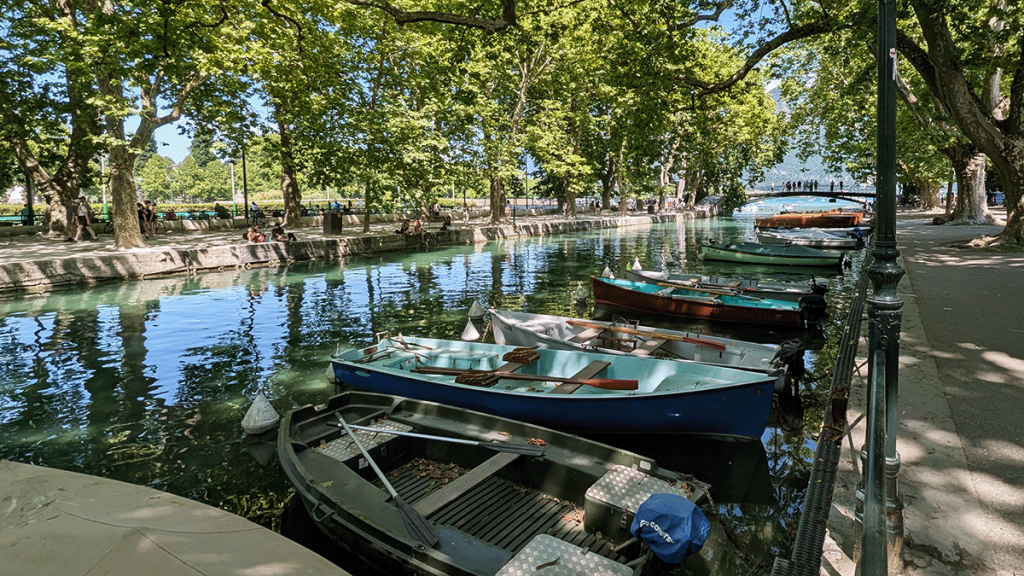
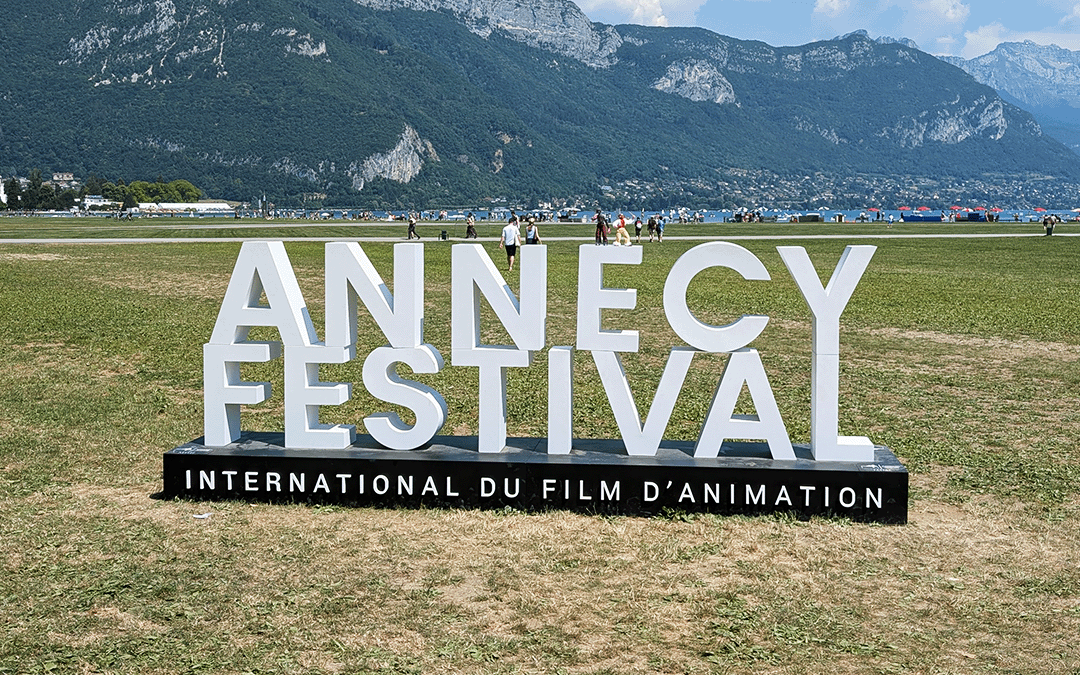
I got back from Annecy a week ago. I let the Gobelins jury pass before sitting down to write this, cold rather than hot off the plane.
This was my first time at the festival, period. Last-minute decision, no accreditation. I wasn't there to sell a film or recruit anyone. I was there to network and to feel the industry from the inside, without a professional filter.
Here's what stayed with me.
A breath of fresh air
Before getting into business, one simple thing needs saying: Annecy is good for morale.
The atmosphere is electric. Long queues, unlikely encounters, a collective energy that borders on naive. You can feel the love for the craft, still intact, and a strong dose of optimism that, in the moment, can feel disconnected from the sector's economic reality.
But I think that's necessary. You need to dream a little before coming back down to reality with the energy to keep going. I came back fully recharged, not naive.
The encounters did a lot of the work. Polish creators pitching their series project, full of energy. A founder from Gabon I hit it off with in a queue, trading notes on our respective paths. Australians with projects on the brain, ready to go. That kind of encounter can't be planned. You just show up, and it happens.
The real story: budgets cut by half to a quarter in ten years
Underneath the euphoria, a different conversation surfaces the moment you scratch the surface, in the sidebar chats between screenings. Veterans, young directors, producers: everyone is talking about the same thing in private. The industry celebrates its creativity in public and negotiates its economic survival backstage.
This was the observation that came up most often, in separate conversations, with people who don't know each other. European animation production budgets have shrunk over the last decade. A factor of two to four, depending on who you ask.
The industry's structural response: more international co-productions to spread the risk, and growing pull from American tax breaks, drawing away productions that would have stayed in Europe ten years ago.
Linear TV is also declining, mechanically, as streaming takes over. Financing models built around traditional broadcast need to reinvent themselves, and that takes time budgets no longer have.
What this means if you're an independent director
This isn't an abstract macroeconomic problem for the sector. It's a margin-of-error problem.
Ten years ago, a poorly prepared sequence in pre-production was costly, but the budget absorbed the hit. Today, with budgets two to four times tighter, the same mistake can sink the whole project. A shot filmed without knowing exactly what it's saying, a scene blocked on instinct instead of clear intent: that's time and money nobody can afford to lose anymore.
Narrative clarity upstream is no longer a perfectionist's comfort. It's what lets you shoot with the budget you actually have, not the one you wish you had.
The response: leaner, more precise structures
What struck me most at Annecy wasn't the crisis. It was how part of the industry refuses to just take it.
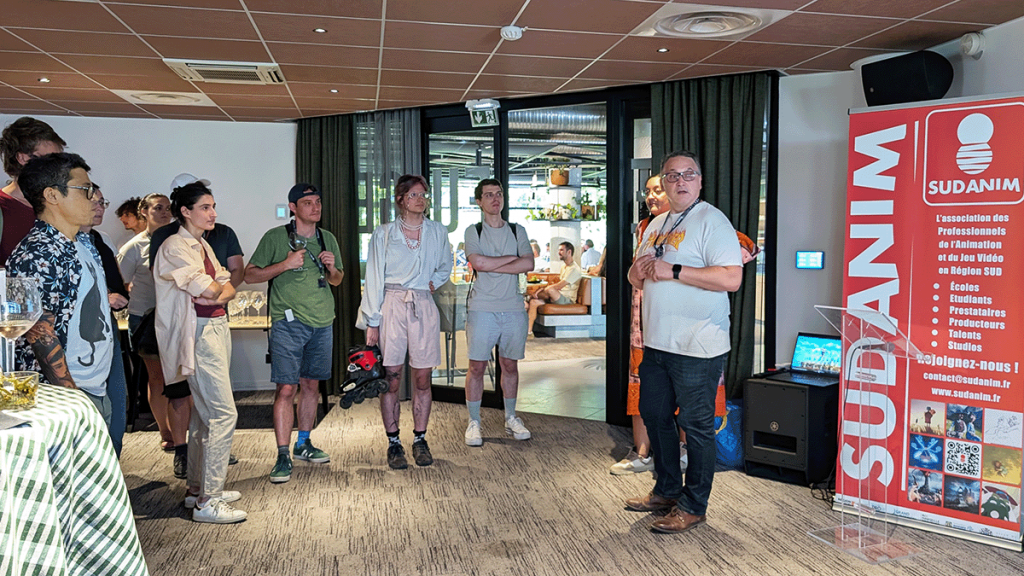
I ran into several initiatives betting on leaner structures to survive: collectives, associations, residencies like Sudanim or Do Not Disturb. Creators pooling resources instead of waiting for a big studio to hire them or a traditional funding round to come through.
I recognize that reflex. It's the same one that made me leave the big studio floors after fifteen years to become an independent consultant: when the classic structure stops protecting anyone, you build another one, sized to fit.
But these leaner structures share one unforgiving trait: they have no room for error. Without a big studio's safety net, a fuzzy pre-production costs immediately more than it should. Narrative precision becomes a survival condition, not a nice-to-have.
And AI, in all of this
The subject was everywhere at Annecy, often framed badly.
I watched an AI-generated short get booed in a screening. I also watched, on the Gobelins jury, students using AI without hesitation for repetitive tasks: quick previz, test asset generation, editing. Both reactions coexist, and I think they're saying the same thing from two different angles.
My take: generative AI can speed up mechanical tasks. It solves none of the staging problems. It doesn't know if your story is clear, if your shot breakdown serves your intent, if the audience will understand what's happening on screen. That work stays deeply human, and it will keep being human as long as telling a story remains an act of choice, not generation.
The more the tools become commonplace, the more the real difference lives elsewhere: in how clear you are on what you have to say before you even open a piece of software, AI or not.
What I'm doing with this
This confirms, more than it surprises, what I've seen for years working with independent directors and small teams: the bottleneck is almost never technical. It's story clarity before the first day of shooting or animating.
If you're prepping a project right now, with a small team and a budget that doesn't forgive guesswork, the question isn't how many resources you're missing. It's whether your story is already clear enough for every shot to earn its place.
That's exactly the work we do together during the Diagnostic, a free 30-minute session to spot where the fuzziness sits in your pre-production, before it costs you.